
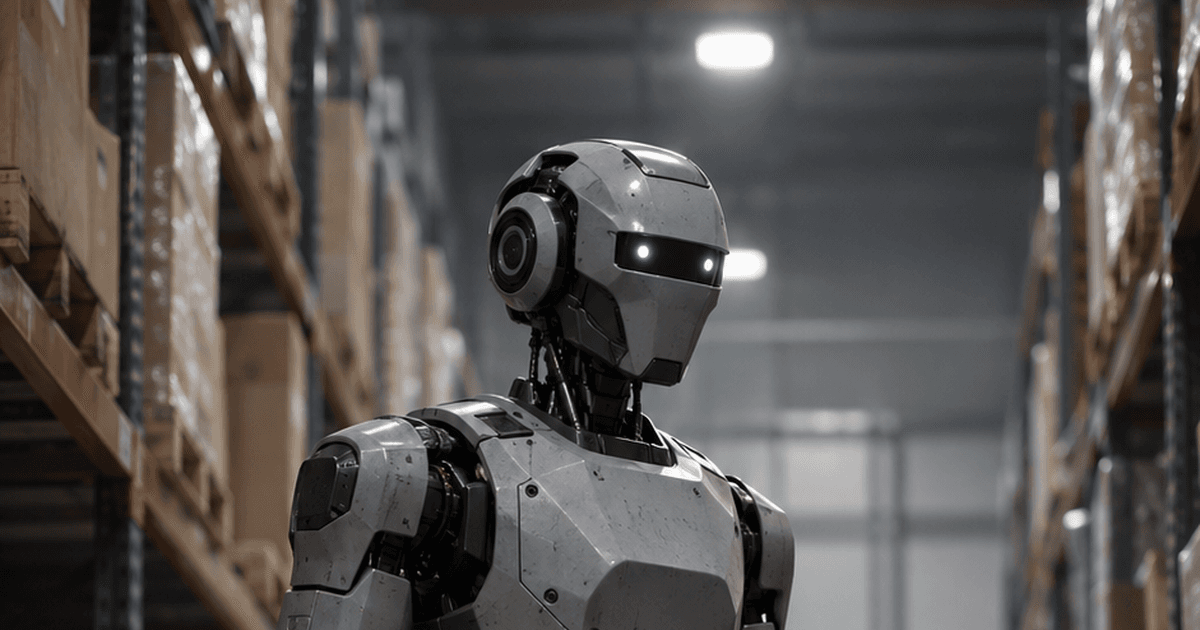
AI robots risk is no longer a science fiction question. In The Robot Explosion, Mohammed Ahmed argues that the useful question is not whether machines will spread, but who answers when they get it wrong.
The warning comes from an old market accident. On August 1, 2012, Knight Capital switched on a software update. Within forty-five minutes its order router had sent more than four million unintended orders into the U.S. market, and the firm lost about $460 million. Nobody acted maliciously. A machine did what it had been told to do, faster than any person could supervise.
Now add a body. The International Federation of Robotics reports that factories installed 603,307 industrial robots in 2025, and the global operating stock passed five million. Humanoid robots are moving from demonstration toward early production, though forecasts of millions of units by 2035 are projections, not machines built.
The financial risk is two-sided. Regulators have warned that many firms relying on the same models could produce herd-like behavior. And the Bank for International Settlements has cautioned that AI and robotics spending commitments are outpacing the earnings meant to justify them.
For work, the IMF estimated in 2024 that almost 40 percent of global employment is exposed to AI, about 60 percent in advanced economies. Exposure is not the same as job loss, and the difference is the real story.
The book's central idea is the human emotion gap. A machine can recognize signs of distress. It does not experience distress, and it does not bear the consequences of its decision. Humans do. The point is not that people decide better. It is that people are accountable, and accountability cannot be automated.
A technology can change the world and still be a poor investment at a given price. Keep those two questions apart.
Read more: https://sites.google.com/view/mohammed-ahmed-global-macro | Amazon author page: https://www.amazon.com/stores/Mohammed-Ahmed/author/B0GNSL86T8
Educational analysis, not investment advice.