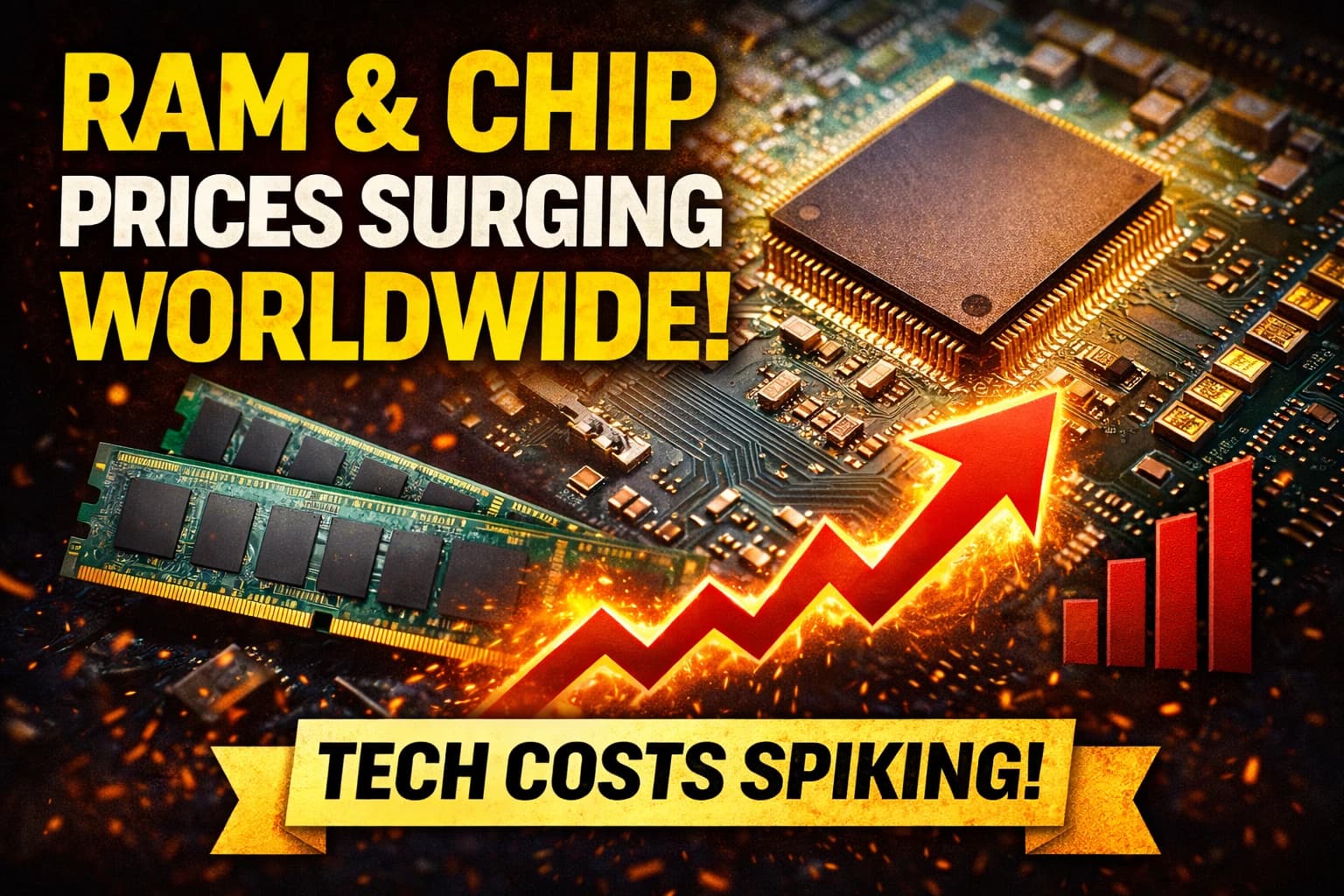
In one of the biggest tech supply-chain shakeups of the year, prices for key computer components — especially RAM (memory) and semiconductor chips — have surged dramatically in 2025, affecting everything from PCs and gaming consoles to smartphones and servers. Experts say this trend could continue into 2026, influencing consumer pricing, product availability, and the cost of cutting-edge technology.
🧠 Why Are RAM & Chip Prices Rising?
Several major forces are colliding this year to drive up memory and chip prices:
🔹 1. Explosive Demand from AI
As artificial intelligence technologies spread across industries, demand for high-performance memory has skyrocketed. AI servers require massive amounts of RAM and specialized chips to train and run large models — far more than typical consumer devices.
This has pushed companies to prioritize production for high-value AI memory over the parts used in personal computers and phones, tightening supply for mainstream products.
Industry analyst data shows memory pricing jumping sharply in 2025, largely due to accelerating AI infrastructure build-outs.
🔹 2. Supply Chain Constraints
Manufacturers such as Samsung, SK Hynix, and Micron are in the midst of transitions to next-generation production lines, momentarily reducing output for existing memory chips. Combined with stricter export controls in some regions and broader semiconductor supply challenges, this has reduced the available inventory of DRAM (dynamic RAM) and NAND flash memory.
🔹 3. Increased Costs of Production
Advanced chipmaking is expensive. Newer fabrication technologies, while promising better performance, require massive capital investment. As factories adjust and older plants scale back, overall supply shrinks even as demand continues to grow.
🔹 4. Smartphone Components Getting Costlier
Smartphone makers — including major brands — report higher RAM and storage costs as DRAM prices surge. This has contributed to increased device prices and tighter profit margins for manufacturers.
📊 How Big Is the Price Jump?
The numbers reveal the scale of the shift:
DRAM prices have risen more than 200% in 2025 compared with early in the year, according to industry tracking.
High-end memory modules, such as DDR5 sticks, are now significantly more expensive than a year ago.
Even smartphone memory costs — previously considered relatively stable — show sharp increases, influencing retail pricing strategies.
💻 Impact on Your Tech Purchases
📦 1. Personal Computers & Laptops
Consumers shopping for computers today are likely to see higher starting prices than they did a year ago. Memory components account for a substantial portion of manufacturing costs, and brands are passing those increases on to buyers.
🎮 2. Gaming Hardware
Gaming PCs and consoles rely heavily on high-speed memory. With supply shortages and rising component costs, manufacturers may either delay new product releases or raise prices for upcoming models.
📱 3. Smartphones
Even smartphones — especially phones with large amounts of RAM and fast storage — are becoming more expensive to produce. Analysts predict that average phone prices could increase by 6–8% in 2026 due to chip cost pressures.
🖥️ 4. Enterprise & AI Infrastructure
On the flip side, companies investing in cloud computing and AI are willing to pay premium prices for cutting-edge memory chips, reinforcing the upward pricing pressure across the entire market.
🧠 What Experts Are Saying
Industry analysts emphasize that the current shortage isn’t a short-lived glitch:
“With AI demand expanding faster than production capacity can grow, memory shortages and higher prices are likely to continue into mid-2026,” says one semiconductor market watcher.
Some manufacturers are exploring alternative materials and architectures to ease long-term supply constraints, but these solutions take years to reach mainstream production.
📉 Consumer Strategies to Cope
For buyers feeling the impact of rising tech costs, here are some expert tips:
Buy sooner rather than later — prices may rise further in early 2026.
Consider slightly older components — current-generation RAM and storage can offer better value.
Watch for sales cycles — major retailers often discount older inventory when new product lines launch.
🧠 What This Means for the Tech Industry
The memory price surge is more than a temporary bump — it reflects a structural shift in how computing demand is distributed. AI, cloud computing, and advanced applications are redirecting chip supplies toward high-end uses, making consumer devices a lower priority.
This has several broad implications:
Longer product cycles as manufacturers avoid frequent price adjustments.
More tiered device offerings, with budget options designed around tighter memory needs.
Increased focus on memory efficiency in software and hardware design.
📍 What Happens Next?
As we move into 2026, market watchers will be watching:
✔ Will memory production increase fast enough to meet demand?
✔ Can alternative technologies ease price pressure?
✔ How will consumer electronics adapt to higher baseline costs?
Answers to these questions will determine whether the industry experiences a temporary price spike or a longer-lasting market transformation.