
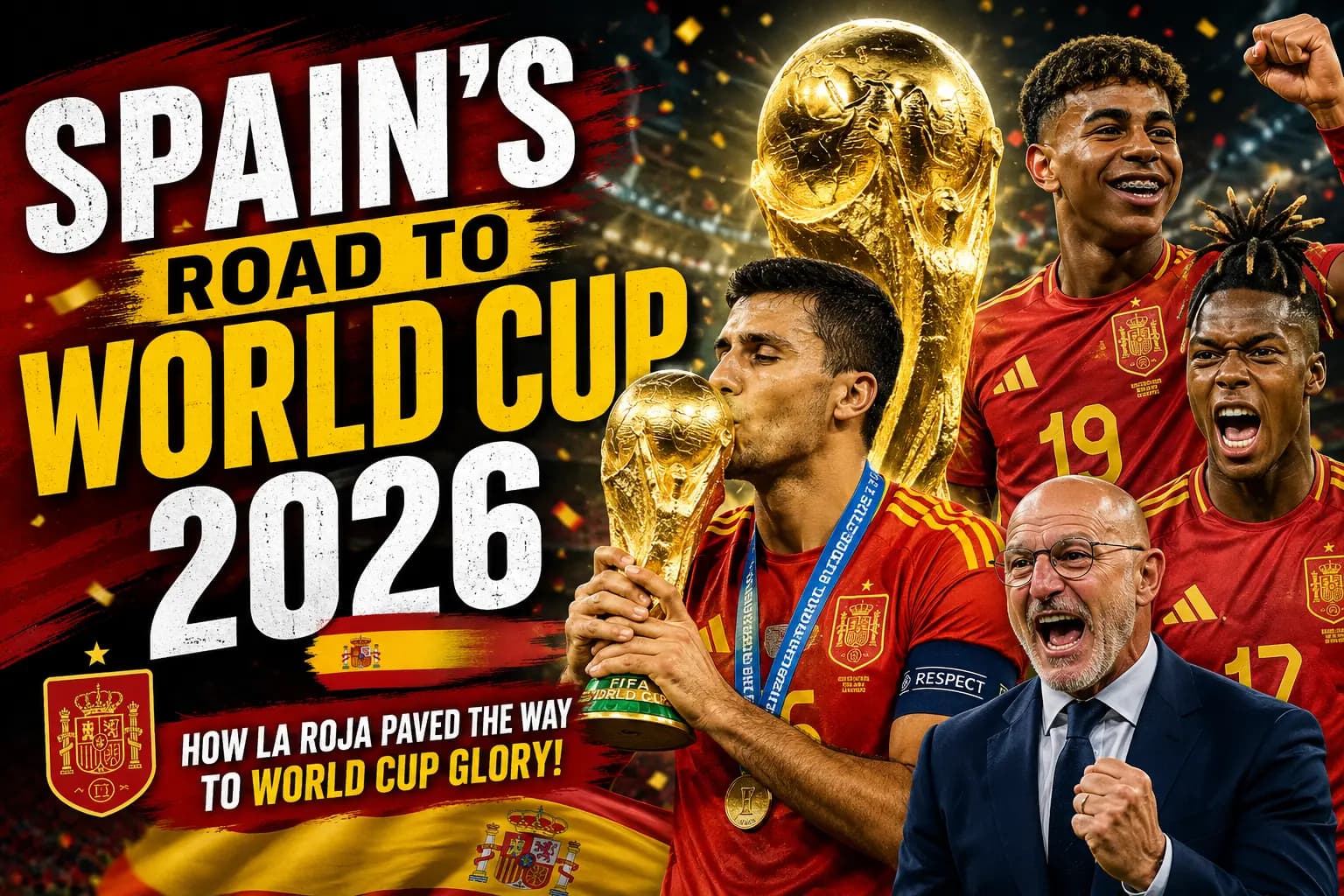
The 2026 FIFA World Cup will be remembered as the tournament where Spain announced the beginning of a new football dynasty. Sixteen years after lifting the trophy in South Africa, La Roja once again conquered the world, defeating defending champions Argentina 1-0 in an intense final that showcased tactical brilliance, defensive discipline, and relentless teamwork. Ferran Torres' extra-time winner sealed Spain's second FIFA World Cup title and completed one of the most impressive tournament runs in recent history.
A New Generation Takes Center Stage
Following years of rebuilding after the golden era of Xavi, Iniesta, and David Villa, Spain entered the 2026 World Cup with one of the youngest and most exciting squads in international football.
Head coach Luis de la Fuente built a team that perfectly blended experienced leaders like Rodri with explosive young stars including Lamine Yamal, Nico Williams, and Pau Cubarsí. Instead of relying on individual brilliance, Spain emphasized collective football—quick passing, intelligent movement, relentless pressing, and positional discipline.
The result was a squad capable of controlling matches against every opponent they faced.
Dominating the Knockout Stage
Spain's route to the championship was anything but easy.
They defeated Austria 3-0 in the Round of 32 before edging Portugal 1-0 in a tightly contested Round of 16 clash. Belgium pushed Spain all the way in the quarterfinals, but La Roja secured a 2-1 victory to continue their journey.
Their semifinal against France proved to be another statement performance. Spain controlled possession, limited France's attacking opportunities, and earned a convincing 2-0 victory to book their place in the final against Argentina.
The Defensive Foundation
Championship-winning teams are often built on great defenses, and Spain's 2026 campaign was no exception.
Throughout the tournament, Spain conceded only one goal in eight matches while consistently frustrating some of the world's most dangerous attacking teams. Their organized defensive structure prevented opponents from creating meaningful chances, allowing goalkeeper Unai Simón to keep multiple clean sheets.
Rodri acted as the team's defensive shield in midfield, breaking up attacks before they reached the back line. Combined with disciplined defenders and intelligent positioning, Spain became the hardest team to break down during the tournament.
Rodri Controlled Every Match
If there was one player who symbolized Spain's success, it was Rodri.
His ability to dictate the tempo, recover possession, distribute the ball, and organize the midfield made Spain almost impossible to press. Every attack flowed through him, while his defensive awareness protected the back four throughout the tournament.
His outstanding performances earned him the FIFA World Cup Golden Ball as the tournament's best player, cementing his status as one of the finest midfielders of his generation.
The Final: Spain vs Argentina
The final against defending champions Argentina was a tactical battle rather than a goal fest.
Spain controlled possession and created significantly more opportunities, while Argentina struggled to produce meaningful attacks. Emiliano Martínez delivered a remarkable goalkeeping performance to keep Argentina alive, but Spain's pressure finally paid off.
In the 106th minute, substitute Ferran Torres found space inside the box and fired the winning goal past Martínez. Argentina pushed for an equalizer but failed to seriously test Spain's defense, allowing La Roja to celebrate their second World Cup triumph.
Luis de la Fuente's Tactical Masterclass
Spain's manager deserves enormous credit for the team's success.
Rather than abandoning Spain's traditional possession philosophy, Luis de la Fuente modernized it. His team pressed aggressively without the ball, attacked with pace on the wings, and remained compact defensively.
Every substitution had purpose, every tactical adjustment improved the team, and his trust in young players paid off spectacularly throughout the tournament.
The Rise of Spain's Next Golden Era
Winning Euro 2024 followed by the FIFA World Cup 2026 has positioned Spain as the benchmark of international football once again.
Unlike previous generations built around a handful of legendary players, this Spanish side is filled with young stars who have years of football ahead of them. With talents like Lamine Yamal, Nico Williams, Pau Cubarsí, and established leaders such as Rodri, Spain appears well-positioned to remain among the world's elite for the foreseeable future.
Final Thoughts
Spain's World Cup victory was not built on luck or individual moments of brilliance—it was the product of years of careful planning, exceptional coaching, and unwavering commitment to a clear football philosophy.
Their disciplined defense, dominant midfield, tactical intelligence, and fearless young talent combined to produce one of the most complete World Cup campaigns in modern football. By defeating defending champions Argentina in the final, Spain didn't just reclaim football's biggest prize—they signaled the arrival of a new golden generation ready to shape international football for years to come.